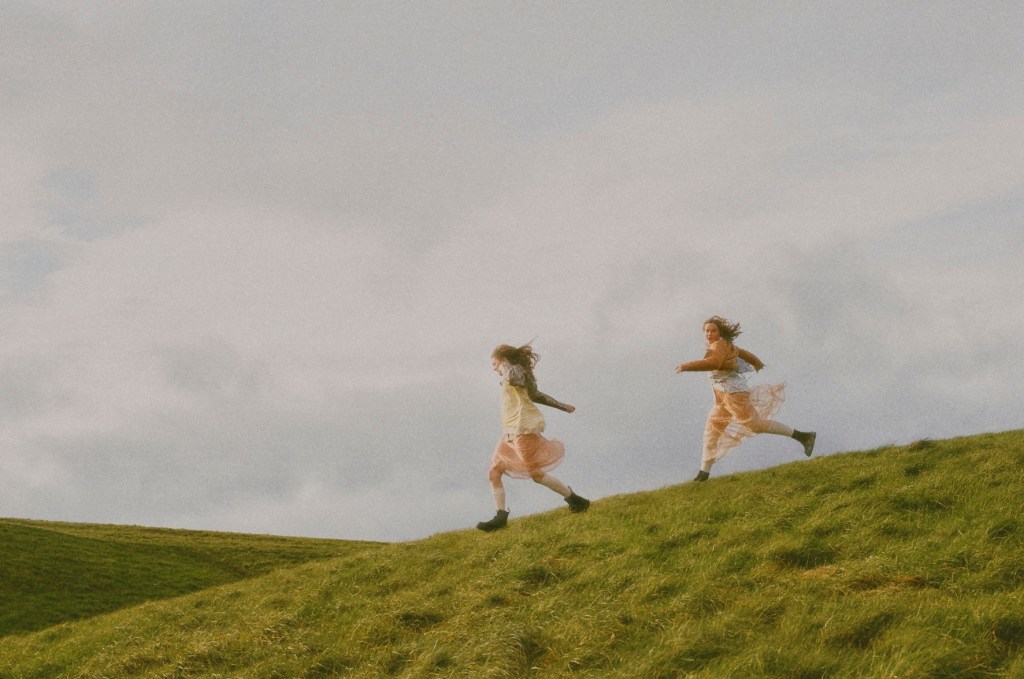
Lemoncello are an Irish alt-folk duo, whose debut LP centred on intimate guitar-and-cello arrangements. Now, Laura Quirke and Claire Kinsella are to release their new and second album Perfect Place on May 8 via Claddagh Records, broadening their sound into full-band recordings, synthesisers and electronic percussion alongside piano and concertina. I asked Lemoncello ten questions to find out how they’re developing their quiet alt-folk in the digital era.
THE ARGUS FAR FIVE
How would you describe the sound of Lemoncello?
That’s a difficult one to describe from the inside. It’s changed a good bit over the years. Before this, we’ve really concentrated on recording the organic sound of the instruments and how we would play the songs in a sitting room. This album is more expansive and maybe slightly less strictly adhering to pop or folk song structure. It’s quite meditative, built on a repeated motif on the guitar or the cello or an electronic beat and built up from there.
This time we had a much more layered approach to the music, which was helped by recording digitally this time with the magnificent Ruth O’ Mahony-Brady, who gave so much of her love and expertise to the production. We’ve turned towards expanding the sound of the core instruments with layers and pedals and plug-ins and amps. We’ve opted to leave out guitar in some songs to give the arrangements more space. There are cello, drums, bass electronic percussion and synths in there, with our voices front and centre. We’d hope that there’d be both tension and comfort in the music. Dreamy, string-swooping, cathartic songs of self reflection.
What are your biggest non-music influences?
Chats with friends, movies, books, life experiences. If you mean by influences, things that motivate you to do stuff – I would say the mind warp of social media, fake news, dichotomy, the information age that were in causes great angst and terror in both of us that is well placed in music.
If you had to cover any song and put a Lemoncello spin on it, which would you choose?
We have been thinking about covering Sufjan Steven’s ‘Fourth of July’, because we had such an emotional connection to that album when we first started out as a band in our late teens.
What is your earliest memory of music?
I remember watching my Mam sing and dance around the house to Simon and Garfunkel as she was washing floors or doing whatever other house work. I thought that’s a good vibe, let me try.
What does the rest of 2026 have in store for Lemoncello?
Playing shows and making the live show as good as we can. We’re very excited about playing these songs live. The live show will have a bit of a theatrical element to it and we’re playing some new instruments that we haven’t played on stage before. Lots of good challenges which make for exciting work.
THE LEMONCELLO FIVE
Your latest single, ‘Meet Me Halfway’, was written during an artist residency in a cabin perched on a clifftop overlooking the Skellig Islands off the southwest coast of Kerry. I imagine that was lovely. How did the landscape inspire the songwriting?
That was a great experience. It’s a pretty mystic and spooky place down there. There was a mistake with the cabin and so we had to share a little bed which was funny. Claire would jump in the middle of the night and say ‘did you hear that?’, and I come from a really old farm house so I was like ‘hah – is that not the pipes or something?’ and then we’d hear something like footsteps but it was in the pelting rain so we didn’t know if it was that or just something wet flapping in the wind – we didn’t get a whole lot of sleep.
I do think we were being watched and taken care of by the hares and definitely felt the presence of spirits between worlds. I think just the wildness of the sea being right there all around you is inspiring. It was a good mirror to the way I was feeling at the time that I wrote that song. The sea is so unpredictable and powerful and so are we inside, yet we remain so small and powerless in comparison to it. I think I found a mirror in the sea — sort of reminding me that I will never totally understand the emotional world or be able to control someone else’s. I remember looking out on the horizon and imagining the vast distances between people, their backgrounds and beliefs and experiences — maybe a bit of a grim thought but I think there was hope in putting it in that song and calling for some sort of middle ground.
The song ‘Dopamine’ from your self-titled debut LP is a rumination on the digital age. How is it to cover modern topics in your stripped-down, acoustic style, a clash of analog and digital?
Yeah, it is funny. We always said that ‘Dopamine’ has more the attitude of a big pop song but then it’s played on the acoustic guitar and the cello. Sometimes when we’re playing it on stage it feels like I’m playing a tiny guitar or something because you want the attitude of it to be so much more bombastic. But yeah, that clash of analog and digital is also I suppose the thing we’re struggling with and talking about in the song — how to manage the ever-changing developments of technology with our very flawed and squishy human brains.
What do you think the biggest shift from your debut to your upcoming album, Perfect Place, has been?
The new album has more of a ‘digital’ sound for sure and maybe I explained some of how it developed sonically already but I think the biggest shift was probably in confidence. We both have grown so much as artists through our twenties. I think I’ve realised that confidence in songwriting comes after a lot of work is done. It’s earned, it’s not just given to you and it is always in flux also and that’s part of the work of being an artist. We also wanted this album to be a lot more of a story from start to finish, have a definite arc and theme and for it to really feel like an album. I’m proud that we managed to achieve that.
‘Old Friend’ has a fascinating tension at its centre, examining the idea of being a ‘stranger’ from all angles. What inspired this song?
‘Old Friend’ was originally inspired by a podcast by Tommy Tiernan called Private Investigations. In it, he was talking about the thing that often happens where you’re so close to people that you haven’t a clue what to say to them. He was suggesting talking to people you know very well and asking them questions as if you were meeting them for the first time. I loved that idea. It felt so freeing. That’s where the chorus came from ‘Old friend, let’s pretend that we’re strangers again’.
Considering the size of Ireland, it produces an immense amount of talent. Why do you think this is?
I think it is for a myriad of reasons. A tradition of playing music in a social setting I think is a big one. It’s how Irish people for so many years dealt with their problems and brought a bit of joy to each other. Just the habit and normalisation of that has carried down into all kinds of music. It’s also kept the heart of the thing a bit more pure. I feel that people here know for the most part the reason they are doing music or art – for a sense of purpose and community and expression- to be able to frame emotions and come together with them. I think when that history of music for enjoyment and catharsis sake isn’t as close to home it’s easier for it to get corrupted by the business — like in places like LA or London. That purity of intention gives the music here great quality.
In comparison to places in other parts of the world, a place like Dublin or other cities/towns in Ireland are pretty walkable. This means people can easily meet up and come together to play music. The tradition also of Irish families and communities is that of meeting up regularly, being a bit on top of each-other.. I think that creates an environment where people are very aware of the standards around them, the intention of other artists and they tune into that and strive to meet it.
Join our (free) mailing list to support the site and never miss an article again!


Leave a Reply