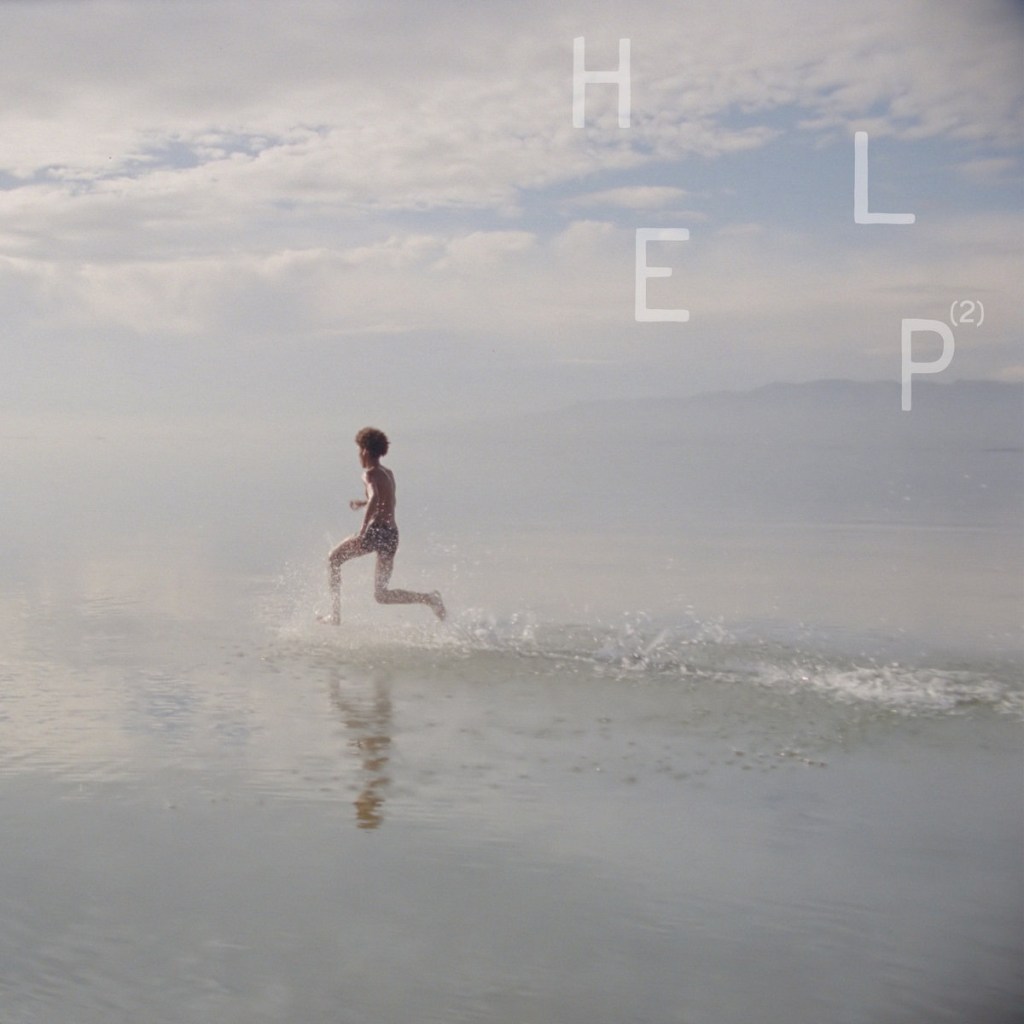
Reviews are flooding in, as they often do, for the new HELP(2) charity record. So, to differentiate myself from the noise and furore, allow me to regale my experience of last night’s HELP(2) listening party at The Greyhound Pub in Peckham, where I heard the album a few hours before most of the world. I’ll be going through the notes that I jotted for each song, as well as some broader thoughts on the album.
Various Artists – HELP(2) – 06/03/26
“I carried my girl across the desert/ Yet not one person noticed her dead”
I arrived at The Greyhound at half seven, after boarding the wrong bus and getting halfway to Queen’s Park before realising. The invitation said the listening party began at eight, but entry was on a first-come, first-served basis, and I’m not one to hedge my bets. I wasn’t expecting Jarvis Cocker to greet me at the door, but a poster or two denoting any kind of event might’ve been an idea. Thankfully, having sat like some mosquito stood up at the bar, a couple of organisers soon came in and plastered thin pink posters onto the walls.
Another hour passed before an announcement was made. Candlelight flickered, a needle pricked plastic. The listening party began.
HELP(2) starts with two tracks we’ve heard before. ‘Opening Night’ by Arctic Monkeys came clicking onto the speakers like an oversized desert beetle, Alex Turner’s croon quite sinister when disembodied and blaring from a speaker. As was Grian Chatten during ‘Flags’, his Irish twang sturdily battering the beat. ‘Flags’ is a strange one; it sounds like three different songs stitched together. That’s not to say that Damon Albarn or Kae Tempest’s verses aren’t of quality, just that it feels slightly less cohesive than other tracks on the album.
Onto the first unreleased track. Black Country, New Road’s ‘Strangers’ was difficult to hear over the chatter of punters and pinthounds, but from what I could, it’s a twee indie pop song, kicking into life at the chorus with a drumbeat. It sounded slightly country, its final chorus and outro punchy and euphoric. All the auxiliary pub noise made it a strange listening experience, each song imbued with erratic noise from actual people, rattling in the sound system, swimming in the social pool.
The Last Dinner Party’s ‘Let’s Do It Again’ uses the momentum of BC,NR’s track to jump onto the bar, can-canning with a raunchy exuberance. It’s typical fare for the Dinner Party, but who can complain? They’ve mastered period-piece pop.
The first cover of the LP is Portishead’s Beth Gibbons with ‘Sunday Morning’. You’ll find that most, if not all, the covers on HELP(2) are acoustic, taking borderline cases of melancholia and stripping them down to an atomic poignancy. The Velvet Underground track may be a 60s standard, but Gibbons tunes its lullabilic celesta riff into something fluid, like a wind whistling through splintered plywood. The second cover comes swiftly, a song that’s been sung by Eartha Kitt, Nina Simone, Jeff Buckley, even Susan Boyle. Now, Arooj Aftab and Beck try their hand at ‘Lilac Wine’, instilling it with a mystic morosity, a heady longing littered with purple elephants whose submergence leads perfectly into ‘The 343 Loop’ by King Krule. This instrumental whizzes and whirrs, grooving with a blissful ambience, a nostalgia of whose origins you’re not quite sure – the best kind.
As it turns out, King Krule had gently readied us for the full synthesised electronica of Depeche Mode and their cover of Buffy Sainte-Marie’s ‘Universal Soldier’. This is the most blatant anti-war song on this War Child album so far, and its menace highlights the hypocrisy around using bombs for peace. Ezra Collective and Greentea Peng’s ‘Helicopters’, with its militaristic title and furtive dub, changes the perspective from the soldier to the citizen, the innocents harassed by the war machine. Arlo Parks resettles the focus onto something more personal, though ‘Nothing I Could Hide’ is just as suitable a name for the themes covered in ‘Helicopters’.
I couldn’t tell where ‘Nothing’ ended and ‘Parasite’ began, but I managed to latch onto it by heading to the bar. Any excuse. Anyway, Graham Coxon (the second Blur alumni to feature) and English Teacher take a self-reflective approach, their riffs repeating as Lily Fontaine’s outbursts swell towards the song’s end. We’re soon treated to some Elliott Smith, in the form of a ‘Say Yes’ cover by Beabadoobee. Bea’s vocals give the song a childlike naivety to them, an unreliable narrative quality that makes every statement of fact seem more of a hopeful attempt at manifestation.
The next track, ‘Relive, Redie’ by Big Thief, is just as eerily melodic as you’d expect from Adrianna Lenker’s troupe. I could feel some residual Smith flowing through the song – whether that’s the chords or tone, I’m not sure. There were also a few electronic zips that I could hear later in the song, though this could well have been the couple behind me preparing to leave.
I wonder why there are so many acoustic tracks on this record. Does it endear us to the record more? Is there a greater feeling of altruism when you’re back to basics? Sinéad O’Connor’s ‘Black Boys On Mopeds’, which strips away all pretence of a noble England with its masterful chorus, was already an acoustic track, though were O’Connor’s version sounds like gentle persuasion, Fontaines D.C. imbue it with a disappointment, perhaps because it’s been 36 years since the original, and what’s changed?
A half-spoken, staccato piece, ‘Warning’ by Cameron Winter is a harrowing piece, though slightly dampened by Winter’s occasional slip into Kermit. It’s stark, as direct as a political address and lined with just as much malice. The strings are unrelenting, their maddening incessance ready to induce anxiety before exploding into Young Father’s ‘Don’t Fight The Young’, a song that pursues with a momentum reminiscent of TV On The Radio’s best tracks. It’s a rollicking track, itself launching into the Pulp’s raucous cowboy romp, ‘Begging For Change’. Jarvis Cocker scats across the track like a prime JCC, stretching the word ‘change’ ‘til holes appear in its skin, applying it to inequalities and etiquettes and everything in between.
The record is slowed right back down by Sampha’s ‘Naboo’. The song has an airy quality about it, while the lyrics are a reality check, a reminder that you don’t need the world to help it. Wet Leg’s ‘Obvious’ maintains a similar energy, its simplicity symbolising an emptiness the song’s protagonist attempts to fill.
Guitar is eschewed for keys on Foals’ ‘When The War Is Finally Done’, one of the few moments on the song not led by a guitar. Sweeping as it is, it may take a few more minutes for its ethereality to materialise into something I can grasp. ‘Carried My Girl’ begins with Bats For Lashes’ voice, underpinned by a drone that sounds like the beginning of ‘Alberto Balsalm’. This song has no trouble gripping me, a tale of apathy and grief driven by the vocals and reinforced by some quietly monstrous piano keys.
The next song boasts the most collaborators, with Anna Calvi, Nilüfer Yanya, Dove Ellis, and Ellie Rowsell all on ‘Sunday Light’. This song sounds like dawn breaking, a hopeful near-finish for the album. Near-finish, as we still have Olivia Rodrigo’s cover of ‘The Book Of Love’, another acoustic turn. Stephen Merritt’s classic is about as pure as a song can get, and Rodrigo handles it with apt delicacy.
And so it was over, except for a live version of ‘Acquiesce’ by Oasis, recorded during their comeback tour. By now, the crowd had thinned, the candlelight waned. I’d have liked to have heard some of these songs in isolation, with many sounding as though they’re cut off before they have chance to really develop. I suppose that’s the issue when you have so much to fit onto two discs.
As far as I can tell, though, I’m not sure there’s been better music made for a charity record like this. Superior to Gareth Gates and The Kumars’ take on ‘Spirit In The Sky’, anyhow. Bravo, James Ford!
Join our (free) mailing list to support the site and never miss an article again!
 Argus Far
Leave a comment