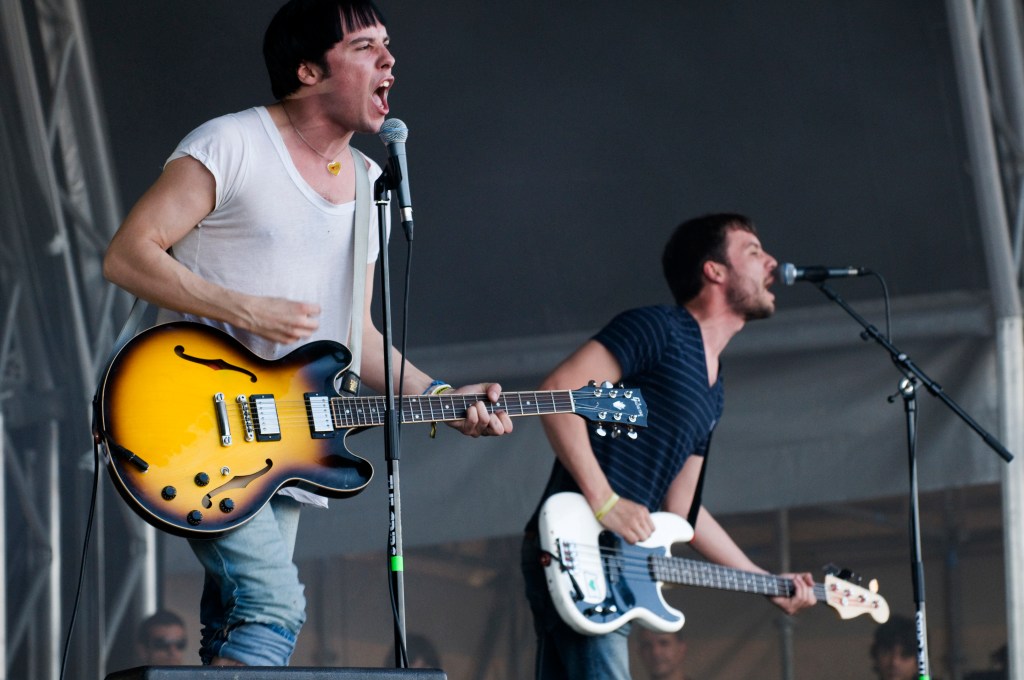
In the music industry, authenticity is gold dust. The Reytons, for example, have built their whole identity around their working-class roots. Amongst their catalogue (which seems to consist either of the same Arctic Monkeys B-side riff or a Little Man Tate singalong), titles like Kids Off The Estate or Alcopops and Charity Shops tap into that mid-2000s indie aesthetic of high-rise estates and lager cans, executing referential lyrics with the subtlety of some Henderson’s Relish.
Back in the day, the musician lifestyle was easier to adopt. Squatter’s rights, communal houses, more grassroots venues, less label oligarchy, and a cheaper cost of living all contributed to a way of life in which creativity was allowed to flourish. It wasn’t glamorous, and many bands didn’t ‘make it’, but the opportunity must have felt as immediate as leaving the house. Nowadays, music is more accessible than ever, but with that has come a saturation, particularly of soundbite songs made for social media. Pros and cons, as ever.
2001-2005 felt like the peak of these merging worlds. The burgeoning accessibility of the internet allowed for faster word of mouth, whilst music culture still had a solid underground and grassroots foundation. Rose-tinted glasses are hard to shake, and there is nuance to any moment in musical history, but I don’t think a new band like The Cribs would have been able to thrive in 2025.
‘Indie’ can sometimes feel like a bit of a dirty word, usually followed by ‘landfill’ and exceedingly not all that independent. However, it would be a compliment of the highest degree to label the Jarman brothers as the purest form of indie. Influenced by both The Beatles and Beat Happening, their 2004 self-titled debut has a spontaneity and charm to it, their catchy melodies and frantic guitar lines belying an endearing and genuine coolness. So many studio albums attempt to feign these qualities, only to end up sounding even more manufactured and insincere. Not The Cribs; they’re even ‘too kitchen-sink for overdubs’, according to Bobby Conn, who produced ‘Tri’elle’ for the band.
Most of the songs are lyrically quite simple, spinning twisted images of unrequited love (the bouncing ‘Things You Should Be Knowing’ or the half-gravel, half-nasal vocals of ‘Learning How to Fight’) and difficult relationships (the Strokes-y ‘Direction’ or ‘The Watch Trick’, with its marching tempo resolved by a swaggering, start-stop ending). Don’t mistake this for blandness, though. These lyrics add to the atmosphere of defiant passion, their easily engageable simplicity bringing the jagged guitars lines closer to the emotional foreground. They are also symptomatic of their youth – their record deal with Wichita Recordings had to be delayed until the drummer, Ross Jarman, turned 18.
God created the world in six days and rested on the seventh. The Cribs had no such luxury. The Cribs was completed in seven days, live to 8-track tape, followed by a UK tour and some European festival appearances. It’s easy to see why their sophomore effort, The New Fellas, was, as lead guitarist Gary Jarman said, ‘a knee-jerk reaction to being exposed to a lot of falseness’. How can you fight the spawn of a behemoth major label, when people base their tastes on t-shirt choices rather than the music? Or when hype can be manipulated by a few well-framed TikToks and the right accent? It’s simply really: ‘if you can’t beat them, don’t join them/ Just post rumours on forums’.
Pop your email below and never miss an article again!
 Argus Far
Leave a comment